Chengdu Shuwei Communication Technology Co., Ltd.
About Us

Chengdu Shuwei Communication Technology Co., Ltd.

NetTAP® (Full named Chengdu Shuwei Communication Technology Co., Ltd.)was established in 2007. Focusing on the Research and Development of Network TAPs/NPBs Communication Equipment, Data Security Analysis Equipment, which provides products and solutions in Big Data Acquisition, Data Storage, Data Monitoring, Data Processing and Data Analysis for Telecom, TV Broadcasting, Government, Education, IT, Finance, Bank, Hospital, Transportation, Energy, Power, Petroleum, Enterprise and other industries...
View More
China Chengdu Shuwei Communication Technology Co., Ltd.

2007

Year Established

10000000 +

Annual Sales

500 +

customers served

100 +

Employees

News
Build Zero-Trust Cyber Security Foundations with NetTAP NT-VPP-5690G
2026-07-07
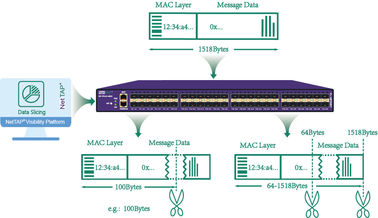
.gtr-container-d7e8f9 { --gtr-primary-color: #0084FF; --gtr-primary-light: rgba(0, 132, 255, 0.1); --gtr-primary-dark: #006BBF; --gtr-text-color: #333333; --gtr-light-text-color: #666666; --gtr-border-color: #E0E0E0; --gtr-background-light: #F8F8F8; font-family: Verdana, Helvetica, "Times New Roman", Arial, sans-serif; color: var(--gtr-text-color); line-height: 1.6; padding: 16px; box-sizing: border-box; max-width: 100%; overflow-x: hidden; } .gtr-container-d7e8f9 p { font-size: 14px; margin-bottom: 1em; text-align: left !important; padding: 0; } .gtr-container-d7e8f9 .gtr-heading-1 { font-size: 20px; font-weight: bold; color: var(--gtr-primary-dark); margin-top: 1em; margin-bottom: 1em; text-align: left !important; } .gtr-container-d7e8f9 .gtr-heading-2 { font-size: 18px; font-weight: bold; color: var(--gtr-primary-color); margin-top: 2em; margin-bottom: 1em; text-align: left !important; } .gtr-container-d7e8f9 .gtr-heading-3 { font-size: 16px; font-weight: bold; color: var(--gtr-primary-color); margin-top: 1.5em; margin-bottom: 0.8em; text-align: left !important; } .gtr-container-d7e8f9 ul, .gtr-container-d7e8f9 ol { margin: 0; padding: 0; list-style: none !important; margin-bottom: 1em; } .gtr-container-d7e8f9 ul.gtr-unordered-list li { position: relative; padding-left: 1.5em; margin-bottom: 0.5em; font-size: 14px; text-align: left !important; } .gtr-container-d7e8f9 ul.gtr-unordered-list li::before { content: "•" !important; position: absolute !important; left: 0 !important; color: var(--gtr-primary-color); font-weight: bold; font-size: 1em; line-height: 1.6; } .gtr-container-d7e8f9 ol.gtr-ordered-list { counter-reset: list-item; } .gtr-container-d7e8f9 ol.gtr-ordered-list li { position: relative; padding-left: 2em; margin-bottom: 0.8em; font-size: 14px; text-align: left !important; } .gtr-container-d7e8f9 ol.gtr-ordered-list li::before { content: counter(list-item) "." !important; position: absolute !important; left: 0 !important; color: var(--gtr-primary-color); font-weight: bold; font-size: 1em; line-height: 1.6; width: 1.5em; text-align: right; } .gtr-container-d7e8f9 .gtr-outcomes { margin-top: 2em; margin-bottom: 2em; padding: 1em; background-color: var(--gtr-primary-light); border-left: 4px solid var(--gtr-primary-color); border-radius: 4px; } .gtr-container-d7e8f9 .gtr-outcomes p { margin-bottom: 0.5em; font-weight: 500; color: var(--gtr-text-color); } .gtr-container-d7e8f9 .gtr-outcomes p:last-child { margin-bottom: 0; } @media (min-width: 768px) { .gtr-container-d7e8f9 { padding: 32px 48px; max-width: 960px; margin: 0 auto; box-shadow: 0 4px 12px rgba(0, 0, 0, 0.05); border-radius: 8px; } .gtr-container-d7e8f9 p { margin-bottom: 1.2em; } .gtr-container-d7e8f9 .gtr-heading-1 { font-size: 24px; margin-top: 1.5em; margin-bottom: 1.2em; } .gtr-container-d7e8f9 .gtr-heading-2 { margin-top: 2.5em; margin-bottom: 1.2em; } .gtr-container-d7e8f9 .gtr-heading-3 { margin-top: 2em; margin-bottom: 1em; } .gtr-container-d7e8f9 ul.gtr-unordered-list li, .gtr-container-d7e8f9 ol.gtr-ordered-list li { margin-bottom: 0.6em; } } Complete network visibility is no longer an optional data center capability—it is the mandatory foundational layer for every modern Zero Trust cyber security program, 100G network monitoring initiative, and enterprise compliance audit framework. Organizations relying on fragmented mirroring, low-density splitters, and underpowered legacy traffic capture hardware will continue operating with critical blind spots across east-west data center traffic, encrypted tunnel flows, and high-speed 100G core uplinks, exposing business infrastructure to unmitigated breach risk, performance outages, and regulatory financial penalties. The NetTAP NT-VPP-5690G 1.8Tbps high-density Network Packet Broker resolves every core visibility limitation plaguing modern mixed-speed data center fabrics, consolidating aggregation, replication, filtering, decapsulation, deduplication, slicing, decryption, and compliance data sanitization into a single compact 1U rackmount appliance. With unmatched port density combining six 100G QSFP28 collection ports and forty-eight 25G SFP28 distribution ports, full hardware acceleration for all advanced traffic processing workflows, nanosecond precision forensic metadata, and industrial-grade redundant power reliability, this flagship NetTAP NPB delivers scalable, lossless network visibility for hyperscale, enterprise, carrier, and regulated industry environments. By deploying the NetTAP NT-VPP-5690G as the centralized orchestration hub of your network visibility stack, security and IT teams unlock three transformative business outcomes: Strengthened cyber security posture: Full inspection of all encapsulated and encrypted traffic eliminates lateral movement blind spots, accelerating threat detection and incident response workflows within your SOC. Maximized monitoring tool ROI: Intelligent traffic filtering, deduplication, and slicing reduce unnecessary bandwidth load on expensive IDS, NPM, and analytics appliances, eliminating hardware overprovisioning waste. Simplified compliance management: Native policy-based data masking and standardized packet forensics streamline audit evidence collection for PCI-DSS, HIPAA, GDPR, and global data protection regulations. Industrial-Grade Hardware Specifications, Redundant Power & Reliability Parameters Below is a consolidated technical specification overview of the NetTAP NT-VPP-5690G, compiled from the official Mylinking product page reference data, summarizing critical hardware, performance, environmental, and power parameters for network architects conducting vendor comparison evaluations: Network Interfaces 6*QSFP28 slots: 40GE/100GE, breakout to 4*10GE/25GE, single/multi-mode fiber support 48*SFP28 slots: 10GE/25GE, single/multi-mode fiber support 1*10/100/1000M copper out-of-band management port 1*RS232C RJ45 CONSOLE serial port Core Performance Total bidirectional switching throughput: 1.8Tbps Dedicated intelligent traffic processing pipeline throughput: 200Gbps Processing architecture: P4 programmable ASIC + multi-core CPU Supported Deployment Modes Optical tap traffic collection, switch SPAN mirror aggregation Core Traffic Processing Functions (Hardware Accelerated) Replication Aggregation Load balancing Seven-tuple filtering Custom 128-byte offset matching Single-fiber transmission VLAN tag manipulation Port breakout Tunnel identification/decapsulation Nanosecond timestamping Deduplication Packet slicing Data masking SSL decryption DPI application identification Video traffic filtering Multi-version NetFlow export Custom decapsulation Monitoring & Diagnostics Real-time port/policy traffic tracking Threshold-based traffic alarms 2-month historical traffic statistics On-demand PCAP packet capture Multi-layer DPI fault analysis Management Protocols Console CLI HTTP Web UI SSH/Telnet SNMP SYSLOG RADIUS/TACACS+ Local password authentication Power System (1+1 Redundant Hot-Swap RPS) Input voltage: AC 110~240V / DC -48V (customer-selectable) AC frequency: 50Hz Input current: AC 3A / DC 10A Maximum power consumption: 650W Environmental Tolerance Operating temperature: 0°C – 50°C Storage temperature: -20°C – 70°C Operating humidity: 10% – 95% non-condensing Physical Chassis Form factor: 1U rackmount Dimensions: 445mm (W) * 44mm (H) * 505mm (D)
Read More
Latest company news about Build Zero-Trust Cyber Security Foundations with NetTAP NT-VPP-5690G
Passive Network Tap vs SPAN & Active Tap: Full Comparison for Optimal Network Monitoring
2026-06-02
When building enterprise network monitoring architecture, IT architects always face three mainstream traffic access choices: SPAN port mirroring, active powered tap and passive network tap. Picking improper tapping equipment will lead to incomplete traffic collection, hidden network security loopholes and unpredictable business interruption, making a detailed technical comparison essential before procurement.   SPAN mirror is the most accessible built-in monitoring method embedded inside layer2/3 switches without extra hardware cost, which explains its wide application in small-scale office networks. Nevertheless, it comes with unavoidable drawbacks restricting large data center deployment. SPAN function occupies switch CPU and buffer resources heavily; once port bandwidth exceeds 70% load, packet dropping occurs frequently, resulting in fragmented network traffic capture and invisible abnormal data flow threatening network security. Besides, most legacy switches fail to mirror full bidirectional asymmetric traffic, creating persistent monitoring blind spots on core backbone links.   Active network tap is powered electronic tapping equipment with built-in circuit boards, capable of full bidirectional traffic replication under nominal bandwidth. However, the inline electrical processing introduces tiny but accumulative latency on production links. Equipped with firmware and remote management interfaces, active taps bring extra attack vectors; once the onboard program has vulnerability, hackers may exploit it to access core network. Moreover, continuous power supply and regular firmware upgrade raise long-term operating cost for large-scale network monitoring layout.   NetTAP FBT passive network tap, as all-optical passive component without any electronic parts, overcomes the above pain points thoroughly. Based on FBT optical coupling principle, it is installed inline on live fiber to split optical signals physically, with zero power consumption and no IP address available for remote intrusion. The primary path keeps original data transmission with limited low insertion loss, while separated monitoring outputs copy every passing packet to analysis tools without omission, achieving lossless network traffic capture under full line-rate load.   In terms of deployment flexibility, passive network tap supports hot insertion without cutting off existing business links, avoiding scheduled downtime for maintenance. Standard rack-mounted modular design allows users to add tap ports step by step as network expands, controlling early-stage investment efficiently. For regulated industries including banking, government and medical care that require strict network security and full-traffic audit, passive fiber tap gradually becomes the preferred solution for core perimeter link monitoring.   To sum up, SPAN fits low-budget minor access-layer monitoring; active tap works for short-distance copper circuit scenarios; passive network tap stands as the most reliable pick for high-speed fiber backbone and mission-critical network monitoring. Check NetTAP official product page to get detailed specification data for your next network renovation project.
Read More
Latest company news about Passive Network Tap vs SPAN & Active Tap: Full Comparison for Optimal Network Monitoring
How Packet Broker Optimizes Network Monitoring Architecture: Traffic Redundancy Issues in Network Monitoring
2026-03-10
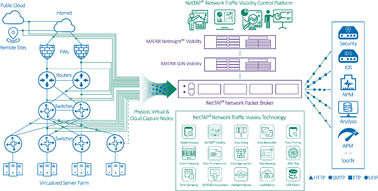
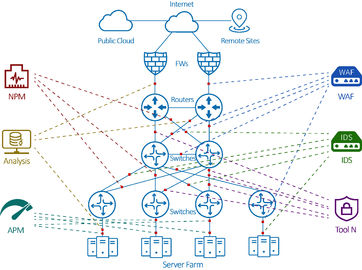
In enterprise network or data center environments, port mirroring (SPAN) is a crucial method for acquiring network data. By mirroring switch ports, monitoring systems can capture and analyze network packets. However, in actual deployments, mirrored traffic often contains a large amount of duplicate or irrelevant data. For example, different switch mirroring ports may capture the same communication traffic, while some monitoring systems only require data from specific protocols or network segments. If this redundant data is sent directly to monitoring tools, it not only increases system processing load but may also affect analysis efficiency. The Role of Packet Broker in Monitoring Architecture Network Packet Broker establishes a unified traffic management platform between the traffic acquisition layer and monitoring tools, centrally processing network data. Device can receive traffic from multiple network TAPs or switch mirroring ports and classify and match packets according to policies through internal processing modules. The system then determines which data needs to be forwarded, copied, or filtered based on configuration rules. In this way, Packet Broker reduces redundant traffic entering the monitoring system and helps monitoring tools focus on processing data relevant to their functions. Core Technical Functions In a network monitoring architecture, a Packet Broker typically possesses the following technical capabilities: **Traffic Deduplication:** Identifies and removes duplicate data packets, reducing redundant traffic. **Packet Filtering:** Filters traffic based on protocol, IP address, or port number. **Traffic Replication:** Replicates and distributes data streams to multiple security or monitoring devices. **Load Balancing:** Distributes high-traffic data across multiple analytics platforms. These mechanisms help monitoring systems process network data more effectively. Network Monitoring Architecture Optimization Ideas When designing a network visualization architecture, a Packet Broker is often a crucial component of the traffic management layer. By centrally managing traffic sources and distribution paths, the deployment structure of the monitoring system can be simplified. Furthermore, centralized traffic processing reduces the number of network nodes directly connected to monitoring devices, making the network monitoring architecture clearer. Deployment Recommendations When planning a Packet Broker system, focus on the following technical parameters: Number of network interfaces and bandwidth capacity Supported packet filtering policies Traffic replication and load balancing capabilities Compatibility with existing security or monitoring tools Properly configuring the Packet Broker platform can help enterprises build a more efficient monitoring system in complex network environments.
Read More
Latest company news about How Packet Broker Optimizes Network Monitoring Architecture: Traffic Redundancy Issues in Network Monitoring
Network Packet Brokers in Hybrid Cloud Monitoring: Supporting Scalable Visibility Infrastructure
2026-02-11
Network Visibility Challenges in Hybrid Cloud Environments As organizations adopt hybrid and multi-cloud architectures, network environments become increasingly complex. Applications may run across on-premises data centers, private cloud platforms, and public cloud services, generating traffic across multiple network layers. In such distributed environments, traditional monitoring methods often struggle to provide complete visibility. Some traffic flows through physical network switches, while other data passes through virtual switches or container networking layers. Connecting monitoring tools directly to each traffic source can increase deployment complexity and may lead to redundant or incomplete monitoring data. For this reason, many organizations are exploring centralized traffic management architectures to improve network visibility across hybrid environments. The Role of Network Packet Brokers in Visibility Architecture A Network Packet Broker is typically positioned between traffic collection points and monitoring tools. In hybrid cloud infrastructures, traffic sources may include physical network TAPs, switch mirror ports, and virtual traffic capture interfaces. By aggregating traffic from multiple sources into a centralized platform, an NPB can process and manage network packets before forwarding them to monitoring tools. The system analyzes packet headers and applies configurable policies that determine how traffic should be filtered, replicated, or distributed to different monitoring platforms. This centralized approach simplifies monitoring architecture and reduces the need to deploy multiple monitoring tools across different network segments. Packet Filtering and Traffic Distribution Capabilities In hybrid cloud environments, Network Packet Brokers typically provide several important traffic processing functions. Protocol and Port FilteringTraffic can be filtered according to protocol types or port numbers, ensuring that monitoring tools receive only relevant data streams. VLAN and IP-Based PoliciesTraffic can be separated based on VLAN tags or IP ranges, allowing different business networks to be monitored independently. Traffic ReplicationA single traffic stream can be replicated and forwarded to multiple monitoring tools, such as security analytics platforms and network performance monitoring systems. Load BalancingHigh-volume traffic can be distributed across multiple monitoring devices, supporting scalable analysis infrastructures. These capabilities allow organizations to manage monitoring traffic more efficiently in distributed cloud environments. Typical Hybrid Cloud Monitoring Use Cases In real-world deployments, Network Packet Brokers are commonly used in several monitoring scenarios: Cloud Infrastructure MonitoringAggregating traffic from different cloud environments and on-premises networks. Network Security AnalysisProviding filtered traffic streams to threat detection and security analytics platforms. Application Performance Monitoring (APM)Delivering application-related traffic for performance analysis and troubleshooting. With a centralized packet broker architecture, organizations can achieve more consistent network visibility across hybrid infrastructures. Building Scalable Monitoring Architectures When deploying Network Packet Brokers in hybrid environments, organizations typically evaluate several technical factors, including: Supported interface bandwidth options (10G / 25G / 40G / 100G) Packet filtering and traffic management capabilities Traffic replication and load balancing features Integration with existing monitoring and virtualization platforms By designing a structured traffic aggregation architecture, organizations can maintain reliable monitoring capabilities even as hybrid network environments continue to evolve.
Read More
Latest company news about Network Packet Brokers in Hybrid Cloud Monitoring: Supporting Scalable Visibility Infrastructure
More Products
What Did They Say
이종만 부장(Korea)
이종만 부장(Korea)
I wanted to take a moment to express my satisfaction as a buyer from Korea after purchasing the Network Packet Broker (NPB) from your company. In a nutshell, I am thoroughly impressed with the product. The NetTAP NPB has proven to be an invaluable addition to our network infrastructure.
I wanted to take a moment to express my satisfaction as a buyer from Korea after purchasing the Network Packet Broker (NPB) from your company.  In a nutshell, I am thoroughly impressed with the product. The NetTAP NPB has proven to be an invaluable addition to our network infrastructure.
Mr. Luis(Hong Kong)
Mr. Luis(Hong Kong)
I would also like to commend your team for their exceptional customer service. They were responsive, knowledgeable, and provided prompt assistance throughout the purchasing process. Your professionalism and attention to detail were truly appreciated.
I would also like to commend your team for their exceptional customer service.  They were responsive, knowledgeable, and provided prompt assistance throughout the purchasing process.  Your professionalism and attention to detail were truly appreciated.
Mr. Mike(Malaysia)
Mr. Mike(Malaysia)
The NetTAP's NPB seamless integration and user-friendly interface made the setup process a breeze. The device is robust and reliable, delivering exceptional performance consistently. It has surpassed our expectations in terms of quality and functionality.
The NetTAP's NPB seamless integration and user-friendly interface made the setup process a breeze.  The device is robust and reliable, delivering exceptional performance consistently.  It has surpassed our expectations in terms of quality and functionality.
Send your inquiry
Please send us your request and we will reply to you as soon as possible.
Send
Google Analytics -->